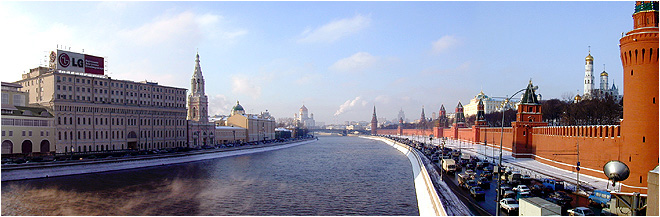
The architectural conception building up of 357 and 359 areas at Sofiiskaya Embankment developed by the Architect's office “Group АBV” and approved by the Moscow Government committee on architecture and city planning envisages active development of the underground space for placement under the surface the recreational zones, engineering and technological facilities and cars parking. The erection of 4-5-storied underground constructions close to the buildings be preserved and reconstructed is also planned. At the same time the number of ground surface storeys is limited (to no more than 6-7 floors) in order to preserve the best views of the Kremlin and Zamoskvorechye remaining
(DWF-drawing, 70.9 Kb).
The analysis of geological exploration archival documents presented by “Mosgorgeotrest” as well as made by NIIOSP name N.M. Gersevanov maps of isohypses of layers bedding of Neverovsky and Voskresensky waterproof clays, Perkhurovsky and Rutmirovsky limestones shows that the planned underground construction on these areas territory will occur under especially complicated geological and hydrogeological conditions close to or directly in the zone of erosive incut (the Moskva-river ancient bed).
In the incut zone basement stratum are eroded completely up to the depth of 22-27 m and the ancient river-bed is filled with unstable water-saturated sands with various seams including quicksand and the sands with plastic sandy-clays and loams interlayers and lenses.
In the same place the pressure waters of the upper-coal horizon merge with the over-coal one free water forming a single water-bearing horizon at the depth of 3-4.5 m from the surface.
Under the fill-up soils layer of 4-6 m thick there are buried plastic clay soils frequently occurring under the bases of existing buildings foundations. At ancient time a territory between the Moskva-river and Vodootvodnoy channel (drainage canal) was the water-logged, which accounts for the historical names of the street and square bounding these areas – Bolotnaya (Marshy).
Namely these facts as well as insufficient bearing capacity of strip foundations with decayed wooden piles in their bases account for the pre-emergency state of most buildings in 357 and 359 areas and mass demolishing of those having no historical and architectural value.
Taking into account extremely complicated construction conditions on this site and using the advanced experience of designing and construction of the Multifunctional complex “The Tsar's Garden” with four-level underground space which construct under NIIOSP name N.M. Gersevanov scientific supervision in spring 2002 by Architect's office “Group АBV” was ordered of conceptual developmental work of proposals on the structures and construction technology for the 357 and 359 areas underground space development.
This work was done within two months period and included two-, four- and five level versions of underground space development with suggestions on the structures, construction technologies, consolidation of foundations, execution of jet-grouting curtains and arrangement of underground structures waterproofing.
One- and three-level versions of underground space development were not considered firstly due to their evident more low commercial appeal with the floor number being limited for ground surface construction and secondly due to the fact that the excavation enclosure has to be done deep enough for a four-storey space development
(DWF-drawing, 32.1 Kb).